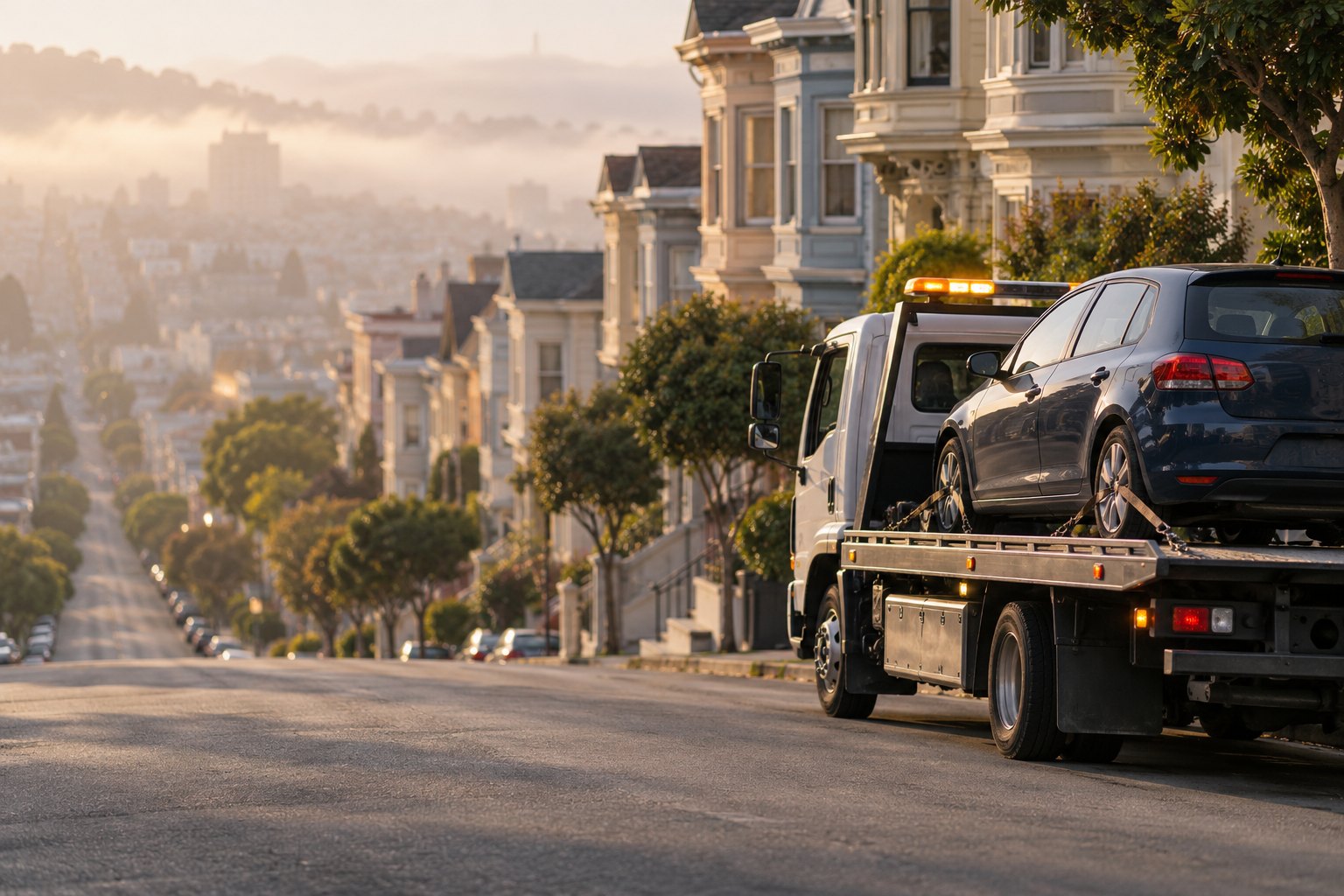
How a San Francisco sale works
- Describe the carEnter the car's basic details online, starting with year, make and model, and describe its condition. The partner buyer answers with a free, no-obligation offer.
- Accept and book the truckYou get a week to accept the offer and schedule the pickup. The buyer arranges the tow and covers its cost, at a time that works for you.
- Hand over the car, take the checkThe buyer's driver checks the car against your description, completes the buyer's title-transfer paperwork and hands you a check. In the buyer's words, "The instant cash offer we provide online is the amount paid at pickup, eliminating price changes or haggling."
Source: The buyer: selling and free pickup; The buyer: offer window and check at pickup.
The offer holds when the car matches what you described, so list the dents, warning lights and missing parts. How the offer works covers the inspection and payment in detail.
What to have ready on pickup day
- The California title in your name. The buyer pays at pickup in exchange for your signed title and keys. If the title is lost, names a co-owner who is not around, or belongs to someone who has died, start with title problems.
- Every key and remote you have. If one is missing, say so when you describe the car.
- Your driver's license or ID card. The buyer lists a valid license or ID as the document that confirms who is selling.
- A loan that is paid off. The buyer says every lien and loan must be paid in full before it can purchase the car, so clear the lender first.
- A smog certificate, when the car needs one. The rule is in the next section.
Source: The buyer: when you get paid; The buyer: documents to prepare; The buyer: liens and loans.
Three California rules San Francisco sellers miss
- The smog certificate is generally the seller's job. The DMV tells a seller to give the new owner a valid smog certification at the sale, and the Bureau of Automotive Repair says the certificate stays valid for 90 days. BAR exempts gasoline, hybrid and alternative-fuel cars four model years old or newer from a change-of-ownership Smog Check; a smog transfer fee is paid instead. Gasoline cars from model year 1975 or older, diesels from 1997 or older or rated over 14,000 pounds, electric vehicles and motorcycles need no Smog Check at all. The smog check guide covers the rest.
- Ordinary plates stay on the car. In the DMV's words, "Generally, license plates remain with the vehicle they were issued to." Personalized environmental, special recognition and special interest plates can be reassigned to another car if the owner asks and pays the fees, so decide about those before the truck leaves. After you sell covers the rest.
- The release of liability is due in five days. The DMV says you must notify it "within 5 calendar days from the date you sell or transfer the title or interest in your vehicle" and hand the car over. Once the DMV receives the notice, parking and traffic violations after the sale date become the buyer's responsibility. The form asks for the new owner's name and address and the odometer reading, so write them down at pickup. File online or on the REG 138; the release of liability guide walks through it.
Source: DMV: smog inspections; BAR: Smog Check; DMV: Notice of Transfer and Release of Liability; DMV: license plates.
Five calendar days, weekend included
California gives you 5 calendar days from the day you sell and hand over the car to tell the DMV, so a Friday pickup spends two of them on the weekend. The DMV page does not say whether the sale day itself counts, so file online the day the truck leaves.
Count your five days →Pickup on San Francisco hills, curbs and garages
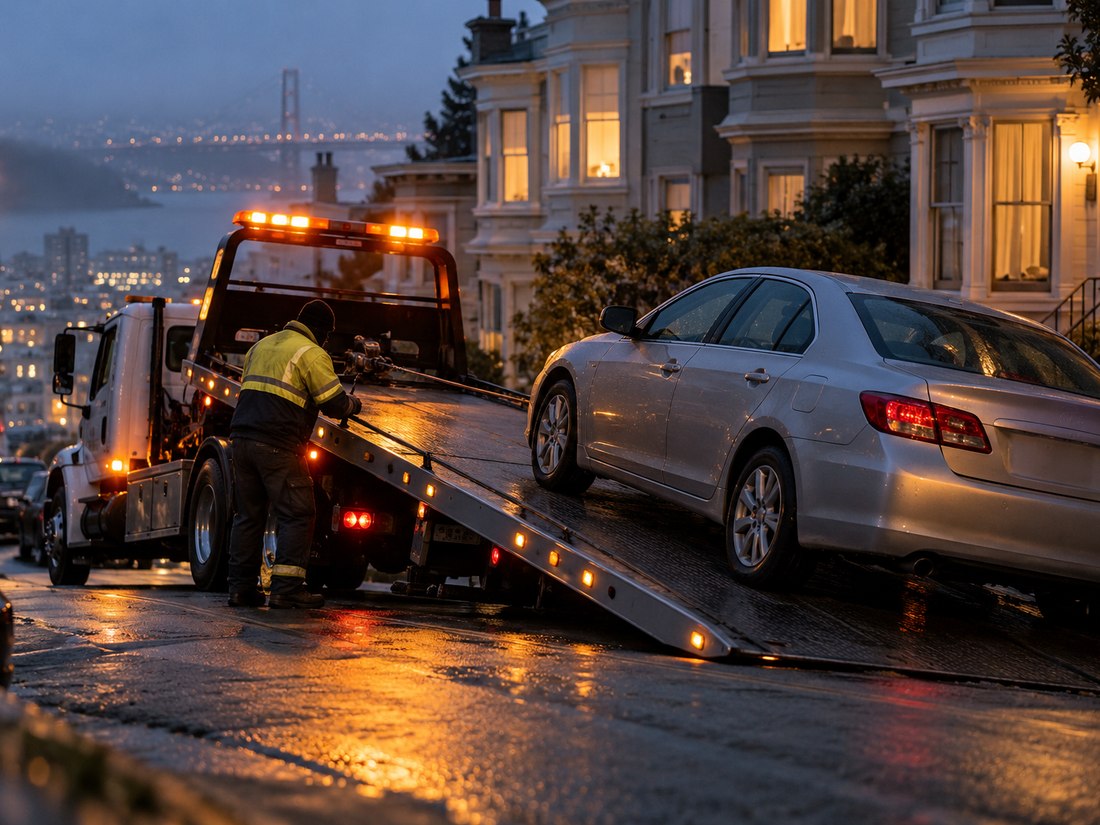
Keep a car that no longer runs off the street if you can. SFMTA limits parking in one spot to 72 hours where no other limit is posted, and it says a car on a public street that is obviously disabled and inoperable, or more than six months out of registration, may be cited and towed right away. Already towed? Read towed or impounded.
Until the driver arrives, follow the city's hill rule: "Curb wheels when parking on a hill of any perceptible grade." Leave the parking brake set and the car in park or in gear, and tell the buyer the car is on a steep block when you describe it.
On pickup day, look 100 feet in both directions for parking and street sweeping signs, and check the meter face and posted signs for commute-hour tow-away zones. If the car is in a garage, behind a gate or in a shared building lot, mention it when you book and have the opener or code ready. SFMTA takes requests for temporary no-parking zones through its Temporary Signage Program, which it describes for moving vans and special events; it is worth asking about on a block that never has an open curb.
San Francisco sellers ask
Does this site buy my car?
No. Sell My Car San Francisco refers sellers to a partner buyer, which makes the offer, sends the driver and pays you. When a referred sale completes, the buyer pays this site a referral fee. The offer is the buyer's own, on its own terms.
Is the online offer what I am paid?
Yes, when the car matches the description you gave. The driver checks the car at pickup and then hands you a check. See the buyer: selling and free pickup and how the offer works.
Can I sell a car that does not run or has a title problem?
The buyer says non-running cars and cars missing parts can still get an offer, and that in many states cars with salvage or missing titles may still be eligible (the buyer: selling and free pickup). Read selling in any condition and title problems first.
Do I have to be home for the pickup?
Not always. The buyer asks you to contact the carrier ahead of time to confirm an unattended pickup, and to arrange payment by mail with its support team (the buyer: when you get paid).
Talk it through before you book
Call (628) 333-6040 to talk with a person about your car and your paperwork. To prepare first, read the California seller paperwork or where to sell in San Francisco.
Everything else about a car in San Francisco
Each one answers a single question for San Francisco sellers, from official sources.
- PaperworkWhich lines a San Francisco seller signs on the California title, when REG 227 replaces it, the 2026 odometer rule, and what the buyer pays.
- Release of liabilityHow a San Francisco seller files California's 5-day release of liability, online or on REG 138, and answers an SFMTA ticket or bridge toll after the sale.
- Smog checkWhen a San Francisco seller must hand over a California smog certificate, the exemptions by year and fuel, the 90-day validity, and help if the car fails.
- Title problemsHow to sell a car in San Francisco with a lost title, a loan, a late owner's estate, co-owners or a misspelled name, and the California DMV form for each.
- Any conditionSell a San Francisco car that won't start, lost its catalytic converter, was broken into or flooded: SFPD reports, BAR smog rules, free pickup.
- Junk carHow to get rid of a junk car in San Francisco: the partner buyer, a licensed dismantler or state retirement, the DMV forms, fee refunds and the SFMTA 72-hour rule.
- Car retirementWhat California's CAP pays San Francisco owners to retire a car that still drives, BAR's conditions, the Bay Area buy back, and how to weigh an offer.
- Where to sellPrivate sale, dealer trade-in or instant offer in San Francisco: why a trade-in saves no California tax, the dealer fee cap and repair math.
- Selling privatelyHow to sell a car privately in San Francisco without a fake check, an overpayment refund or a fake escrow site, and the safe handover order.
- How the offer worksHow the partner buyer's offer works for a San Francisco car: the free offer, booking pickup, the driver's inspection at your address, the check, and what can change it.
- After you sellWhat a San Francisco seller still has to do after the car leaves: the DMV release, FasTrak and Golden Gate tolls, SFMTA tickets, insurance and car data.
- Salvage & rebuiltHow a totaled San Francisco car becomes salvage, the 10-day REG 488C deadline, revived salvage inspections, and selling it with the brand disclosed.
- Towed or impoundedWhere SFMTA tows go in San Francisco, the 2026/2027 tow, admin and daily storage fees, the low-income waivers, and when to sell instead.